Science Crossword Puzzles
Light Interactions
reflection: the bouncing of light or other waves off a surface., opaque: the quality a material has when light cannot move through it., refraction: the bending …
Separation Techniques
filtration :separates solids from liquids using a filter., residue :solid left behind after filtration., filtrate :liquid that passes through the filter., …
States of Matter
mixture : two or more substances together but not chemically joined, solid : the state of matter with particles which move the least, distillation : …
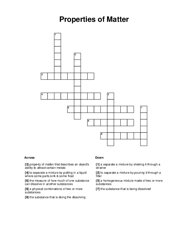
Properties of Matter
magnetic: property of matter that describes an object's ability to attract certain metals, solution: a mixture of two or more substances that are evenly …
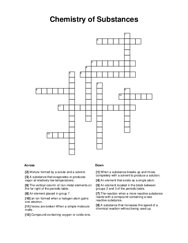
Chemistry of Substances
catalyst : a substance that increases the speed of a chemical reaction without being used up., dissolve :when a substance breaks up and mixes completely with a …
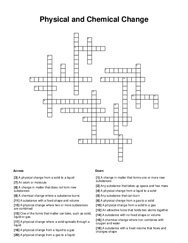
Physical and Chemical Change
chemical bond : an attractive force that holds two atoms together, chemical change : a change in matter that forms one or more new substances, combustion : a …
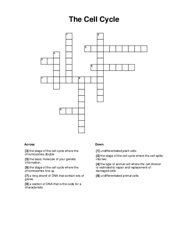
The Cell Cycle
dna: the basic molecule of your genetic information., cytokinesis: the stage of the cell cycle where the cell splits into two, meristem: undifferentiated plant …
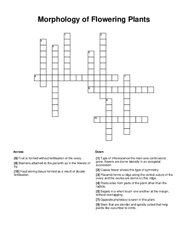
Morphology of Flowering Plants
adventitious : roots arise from parts of the plant other than the radicle., tendril : stem that are slender and spirally coiled that help plants like cucumber …
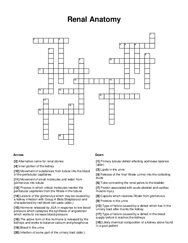
Renal Anatomy
medulla : inner portion of the kidney, renin : hormone released by jga in response to low blood pressure which catalyzes the synthesis of angiotensin which …
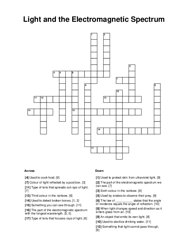
Light and the Electromagnetic Spectrum
reflection : the law of __________ states that the angle of incidence equals the angle of reflection. [10] , refraction : when light changes speed and direction …
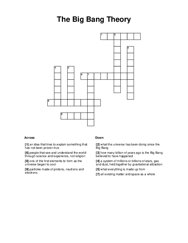
The Big Bang Theory
atoms : particles made of protons, neutrons and electrons, humanist : people that see and understand the world through science and experience, not religion , …
States of Matter Summary
sublimation : solid to gas, freezing : the opposite of melting, different: a compound is a substance that is made up of _____________ types of element …
States of Matter Vocabulary
amorphous solids : solids where the atoms or molecules are in no particular order, change of state : the conversion of a substance from one physical form to …
Atoms, Elements and Periodic Table
mendeleev: the russian chemist who first organized the periodic table by atomic mass in 1869., atomic number: the modern periodic table is organized according …