
Science Crossword Puzzles
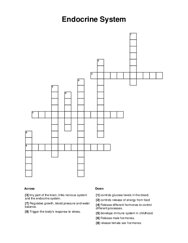
Endocrine System
pituitary gland: regulates growth, blood pressure and water balance., testes: release male hormones., thymus gland: develops immune system in childhood., …
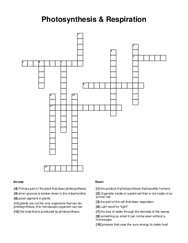
Photosynthesis & Respiration
cyanobacteria: plants are not the only organisms that can do photosynthesis, this microscopic organism can too, transpiration: the loss of water through the …
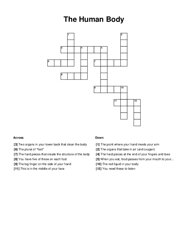
The Human Body
nose: this is in the middle of your face, ears: you need these to listen, toes: you have five of these on each foot, feet: the plural of "foot", …
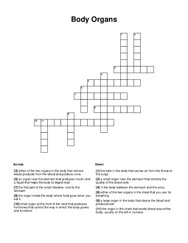
Body Organs
liver : a large organ in the body that cleans the blood and produces bile, duodenum : the first part of the small intestine, next to the stomach, kidney : …
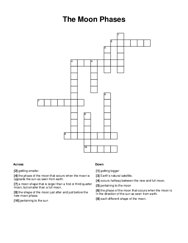
The Moon Phases
waxing: getting bigger, solar: pertaining to the sun, newmoon: the phase of the moon that occurs when the moon is in the direction of the sun as seen from …
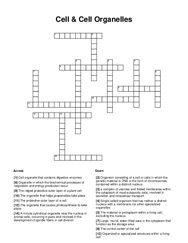
Cell & Cell Organelles
cell membrane : the protective outer layer of a cell, organelle : organized or specialized structures within a living cell , prokaryote : single celled organism …
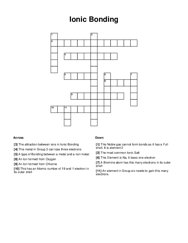
Ionic Bonding
sodium : this element is na, it loses one electron, potassium : this has an atomic number of 19 and 1 electron in its outer shell, sodium chloride : the most …
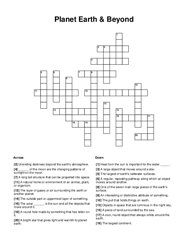
Planet Earth & Beyond
moon : a cool, round object that always orbits around the earth., gravity : the pull that holds things on earth., surface : the outside part or uppermost layer …
Forensic Science
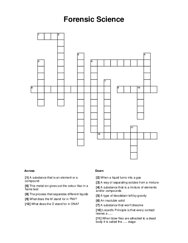
insoluble: a substance that won't dissolve, evaporation: when a liquid turns into a gas, pure: a substance that is an element or a compound, impure: a …
Science & Nature
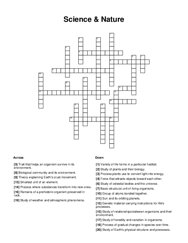
atom : smallest unit of an element., solar system : sun and its orbiting planets., photosynthesis : process plants use to convert light into energy., gravity : …
Body Systems & Organs
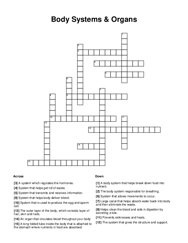
large intestine : large canal that helps absorb water back into body and then eliminate the waste., nervous : system that transmits and receives information., …
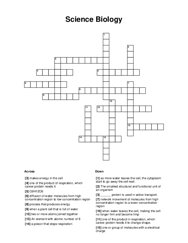
Science Biology
cells: the smallest structural and functional unit of an organism, plasmolysis: as more water leaves the cell, the cytoplasm start to go away the cell wall. , …
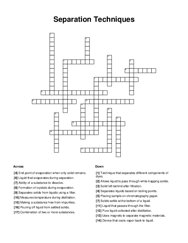
Separation Techniques
filtration :separates solids from liquids using a filter., residue :solid left behind after filtration., filtrate :liquid that passes through the filter., …
